

INTERVIEW MICAEL G. OLIVEIRA
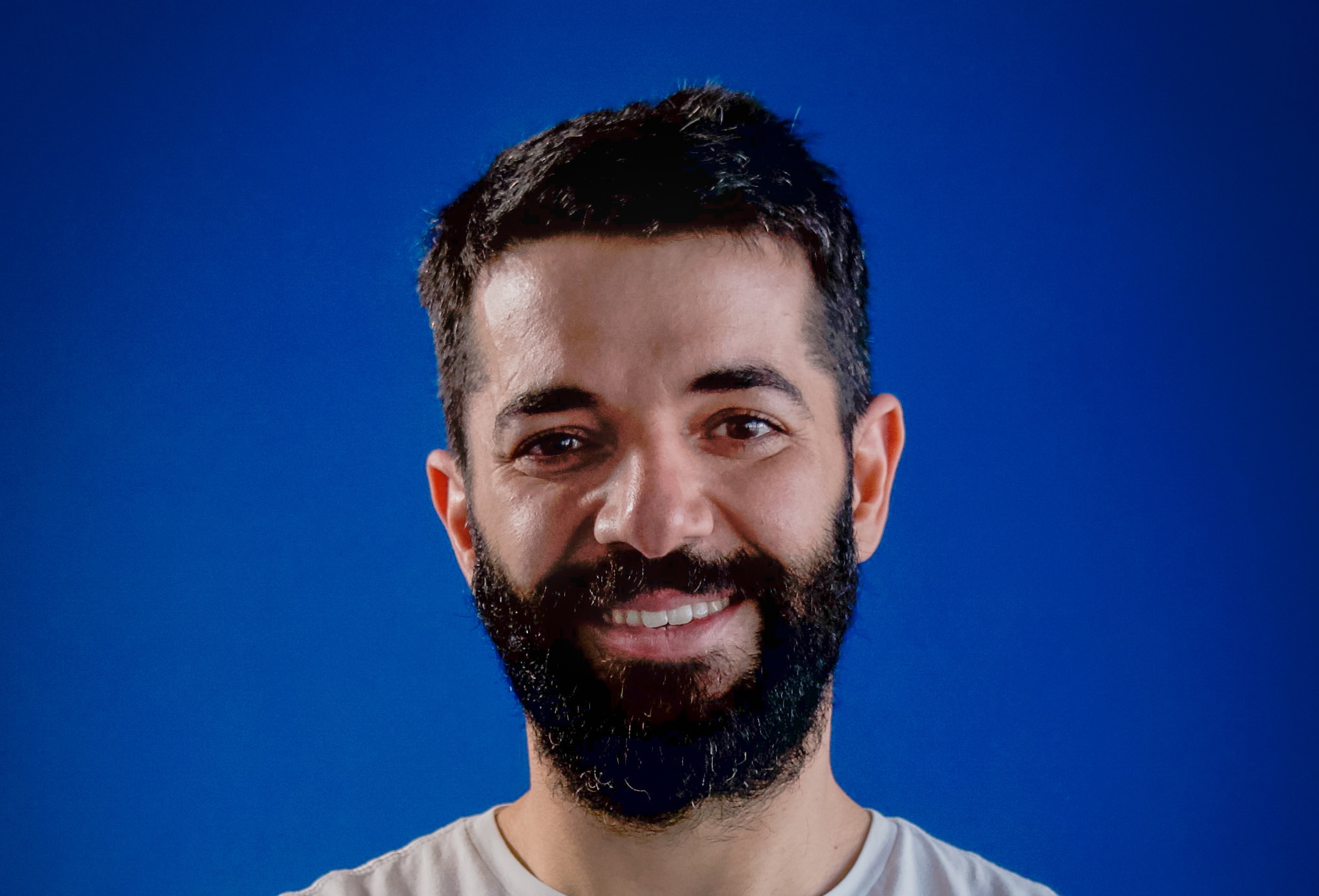
ABOUT YOU
Who are you?
It's a multi-layered question. I was born in Portugal, lived most of my life in Luxembourg, and moved to the US ten years ago. But today, first and foremost, I'm a father of two daughters, a husband, and the founder of Amplemarket and Fermat's Library, based in San Francisco.
I'm also a scientist by training - trained in physics. My two co-founders are also scientists: we're two physicists and one computer scientist.
In a nutshell: I'm a father, a physicist, a founder, and a husband.
What should our community know about you?
I started my startup journey 10 years ago in Lisbon and then made the move to San Francisco. We're a remote-first company: one third of our team is based in North America, and two thirds are international, with a particularly large presence in Portugal. So we genuinely live on both sides of the bridge, the Red Bridge in Portugal and the Red Bridge in San Francisco.
I love being in San Francisco for the energy and the pace. Things move fast here, and it's bold. Every day I get to meet people who want to change the world, or who are already shaping it in real ways. That's unique to San Francisco, and I love bringing more of that energy back to Portugal.
Not to change Portuguese people, but to show them that the people building the future are just people, like them.
Growing up in Europe, I always assumed those people must be very special. I've been lucky to meet many of them since, including Sam Altman. He's shaping the world right now and he's brilliant, but I can tell he's just a person, like you and me. He's simply bold enough to think he can make a difference.
ABOUT YOUR MISSION
What do you do? What is your mission and what drives you?
I did my bachelor's in Strasbourg and my master's in physics in Lisbon, where I met my co-founder Luis. João, our co-founder and Luis's brother, was in Boston at the time, studying computer science.
Back in 2014, launching a startup in Portugal wasn't really a path. There were two well-known startups in the country, Feedzai and Talkdesk, and the best students were being recruited by BCG and McKinsey. But we'd been listening to Silicon Valley podcasts for years, and we were convinced we wanted to build something. So the three of us took a sabbatical year, got an office and a whiteboard, and started mapping problems worth solving.
We landed on e-commerce. Shopify was still small at the time, and we built an app that gave independent merchants the kind of recommendation and email tools that Amazon's data scientists were building for themselves. That app got us into Y Combinator in 2014, and across the first bridge to San Francisco. After three months in the program, we pitched at Demo Day and raised our first round. At the time, investors required us to have the whole team in the US.
In 2018, we identified a much bigger problem for companies: their sales process. We spent two years researching it before launching Amplemarket in 2020.
We believe AI should empower sellers, not replace them. We aim to give every seller what they need to reach the right buyer, at the right time, with the right message, on the right channel. The goal is to build trust, to bring sellers closer to buyers in a smarter way.
What I didn't expect is how fast the rest would catch up. AI is unleashing creativity, and the gap between knowing what you want to build and shipping it is collapsing. At our last company offsite we ran a hackathon, and two people from our support team, who don't write code, shipped apps that genuinely impressed our engineers.
That's the shift most people are still underestimating. Companies are about to get smaller and more numerous, which means more salespeople doing broader work, with AI doing the heavy lifting underneath. Critical thinking becomes a scarce skill, because that's what lets you frame a problem clearly enough for AI to actually solve it.
You said that your solution is meant to leverage AI to increase the quality of human connections. What do you think people need to pay attention to and need to develop?
Empathy and trust.
In sales, what people are really exchanging is trust. And trust is a deeply human thing. Good sellers have the ability to empathize with the buyer, and that's deeply human too.
AI is going to do the matching: identifying the reason to connect, finding the right people to talk to. But then humans have to do the work. Sales is becoming more about human interaction, not less. It actually gives people more time to develop themselves as human beings.
In my world, growing up, humans were always smarter than things. My mother was the smartest person I knew. For my daughters, the phone is smarter than dad, and the car drives itself. In their world, things are smarter than humans.
So the question I carry with my daughters applies to all of us when it comes to AI: what can I teach them that will help them think, and build determination, effort, persistence, and grit? That's what we should be paying attention to.
What is your next big thing in the months to come?
We're like frogs in warming water. The next twelve months will reshape how sales teams operate, and we want to be the platform that carries them through it. The way companies build growth is changing fundamentally, and we're building the infrastructure to support it.
Today we work with more than 1,300 companies globally, from SMBs to Fortune 500s, across the US, Europe, APAC, and LatAm. Europe is around 35% of our base. We're just getting started.
ABOUT REDBRIDGE
What represents Redbridge for you? And how does this bridge make sense to you?
We are present on both sides of the Atlantic. While I am living here, one of my co-founder lives in Lisbon. We have a big presence in Portugal with engineers in Porto, in Lisbon product managers. Portugal is a baby market only 10 years old, yet it’s changing fast, it now has great companies and the best students.
While it’s easier to say what the US has and can bring to Portugal since it’s a more mature market. But it’s not specific to Portugal, it applies to the world. The boldness, the eagerness to make a difference, the rhythm and pace to try, implement, fail and restart.
Yet Portuguese people are very dedicated to solving problems and they have persistence and grit. They are more loyal to the company and to the mission and mission of the company.
In Europe we are very science driven while in the US it’s more action driven.
What is your call to action for the members of our community?
I feel strongly linked to the Portuguese ecosystem here in San Francisco, I am happy to support them and provide any help. Feel free to reach out to me.
Follow Micael Oliveira on his LinkedIn or on X.
Interview by Aurélie A. Vincent, Founder of Embody Agency
