

Interview Rebecca Saltman
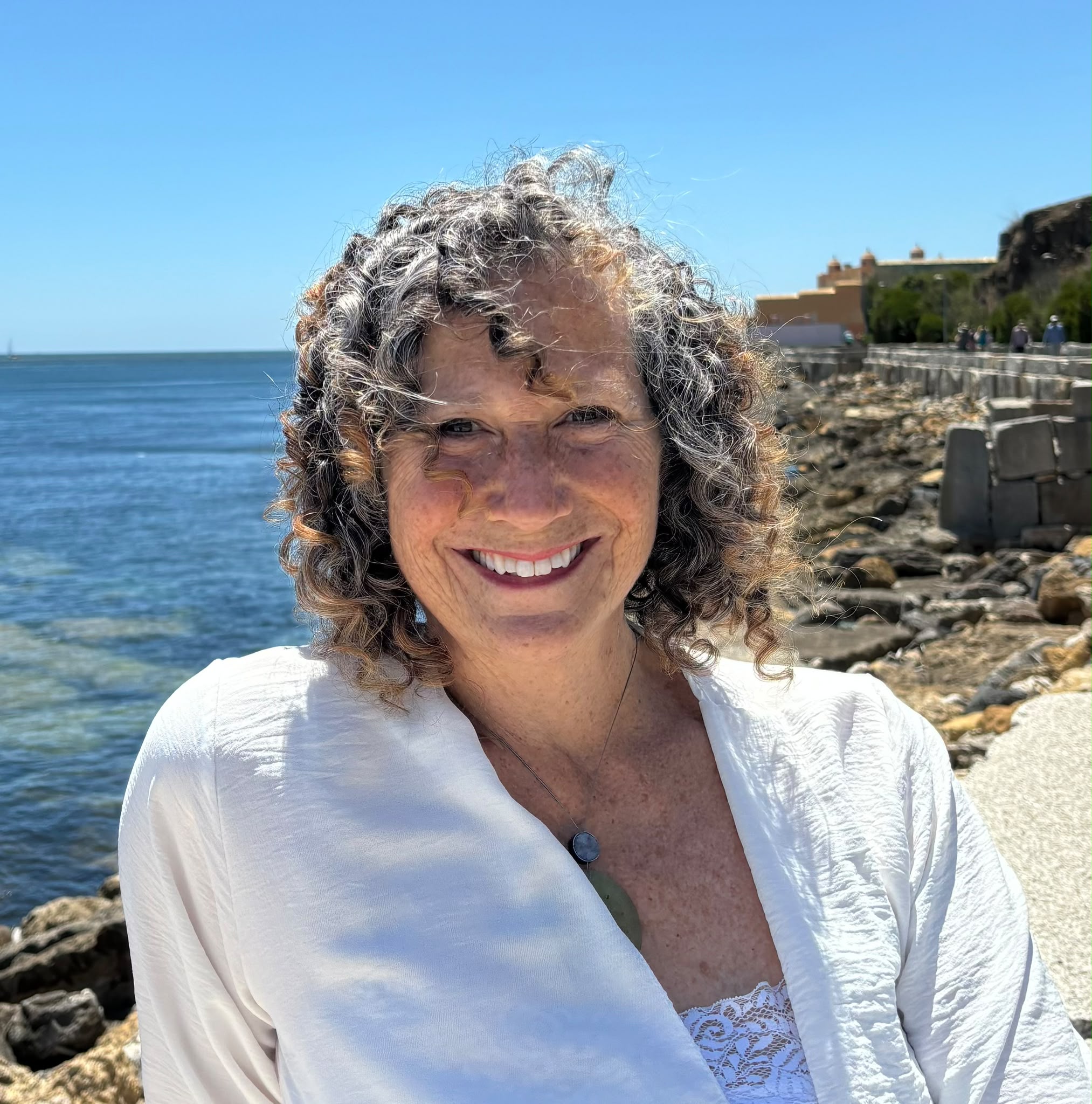
ABOUT YOU
Who are you?
I was born and raised in Boston. I spent a long time weaving my way between different worlds. I grew up in the theater—I wasn’t an actress (I’m actually a terrible one). My parents were exceptional at creating connections and tribes. I grew up surrounded by family that felt like friends and friends that felt like family. I learned from all kinds of people—doctors, lawyers, construction workers—across the whole spectrum.
I am an amalgamation of all those incredible people. What I learned, and what has become my life’s work and mission, is to live in reciprocity—being with each other in the world. That continuum of experiences all points back to reciprocity. That’s my work, my joy as a Social Entrepreneur.
You say theater taught you everything. What did you learn that most of us never do?
From the age of 10 I was at Boston Children’s Theater outside Boston. . Acting didn’t resonate, but I quickly began working as a stage manager at only 10. As a stage manager you see the entire ecosystem: lighting, scenery, actors, sound, props—all of it has to move together in collaboration. If the lead actress is difficult, she might find herself on a dark stage… or with something unexpected in her prop drink. People don’t tolerate the inability to work together.
The theater became another tribe. I learned early that working together is far better than working in isolation. It was an incredible education.
I did my undergraduate degree at Ithaca College in upstate New York. I thought I would become a set designer, but I discovered I was really good at theater management, so I earned my bachelor’s in that. Then I did my master’s at UCLA. My years living in Los Angeles were foundational.
The skills translated into everything. Entrepreneurship and social entrepreneurship are remarkably similar to theater: at eight o’clock the curtain opens and you have to put on the show. As an entrepreneur you have to pitch the next investor, describe your work to a partner, or simply do the hard work—whatever is required that day.
I believe theater remains one of the best educations a young person can receive. It forces you to do the work. It’s not like youth sports where everyone gets a trophy just for showing up.
As a stage manager you would learn
- Holding all the pieces together so the director’s vision can be realized
- Systems thinking: seeing how every element affects every other
- Creative, operational problem-solving (gaffer tape is your friend—in theater and in life)
- Future vision and the ability to keep the whole system moving when something breaks
That system's lens has become central to my later work in reciprocity, currency, value flow and systemic impact.
ABOUT YOUR MISSION
How did a theater kid and later stage manager discover that her real work was social entrepreneurship?
I consulted in the nonprofit sector for years. I would arrive, fix the challenge in three to six months, and essentially work myself out of a job. People hired me for my network—expecting me to fundraise through it—or to produce events. I even had a couple of corporate jobs, I delivered strong results, but it was rarely able to be duplicated by long-term staff, and often more than one person was needed to replace me.
In the early 2000’s in Denver I became part of the original startup community. I realized entrepreneurship could be done for good. That is social entrepreneurship: using entrepreneurial approaches to address communities’ most pressing social needs.
Around 2010 I connected with Ashoka, the leading global social entrepreneurship organization. I produced events for them, including the Denver Change Your City campaign, and worked with them for a couple of years. It was my tribe—people feeding tens of thousands daily, creating play that lifts people out of poverty, changing systems in India, Africa and beyond.
A funny story: my mother had spent years trying to explain what I did. When I finally told her I was a social entrepreneur, she tried the phrase on a plane. The woman next to her asked, “Does that mean she runs a dating service?” My mother was crestfallen—then realized that, in a way, yes: a matchmaker for social good.
What drives you and what is your next big ?
Everything I have described—especially reciprocity and systems thinking—drives me. Many people, including close friends, cannot even pronounce “reciprocity,” let alone live it.
I am working on a book soon to be released titled Reciprocity: An Ancient Future Love Story. Reciprocity is ancient and it is the future. It has been largely absent from the muddy middle of modern life because of how we have been taught to value money above all else.
My drive is to help create a world that works for everyone by thinking and living in reciprocity.
What do you mean by Reciprocity and Currency? How did it turn into a life practice?
People often treat reciprocity as a transaction. It is not. Reciprocity is not tit-for-tat. It is not “you gave me something of a certain financial value, so I must give you the same back immediately.”
Reciprocity works like breath, or like the currents in the sea. I might keep an eye on the fifteen-year-old neighbor’s kid staying alone, across the garden with no expectation of payment or return. I’m simply participating in the continuum of the tribe.
We have been trained to believe money is our only currency. That is far from the truth. Time and attention are far more valuable. When we conflate time with money we devalue our time.
A babysitter and an attorney cannot exchange hours in a way that equates their market rates—yet the value of caring for someone’s children is profound. If we live as if money is the only currency, we live in scarcity. When we recognize time, attention, social connection and environmental health as currencies, life becomes far richer.
How does this model or Reciprocity marketplace concretely translate in real life ?
Years ago in Colorado, with the National Center for Community Collaborations, a fellow board member and I created what we called the Collaboration Marketplace (now the Reciprocity Marketplace).
At the start of every event, people took three minutes to pitch what they were doing and what they needed—with one absolute rule: you cannot ask for money. You must break your need into concrete, non-monetary pieces.
Someone pitching a cancer walk/run might ask for street-permit help, food stations, water stations, volunteers. Then the room responded:
- “My kid’s scout troop needs volunteer hours—can they help?”
- “I have a pastelaria; I can overbake and donate pastéis de nata—can you give me a tax credit?”
- “My mother lives in a retirement community; the residents have all their marbles but don’t get around well. Can they check people in or hand out water?”
Business cards are exchanged. The pitcher then has the responsibility to follow up. Importantly, reciprocity does not mean returning the exact same thing to the exact same person. It means giving into the larger web so that the whole community is nourished. Every time, people received far more than they imagined—and the community itself began to think differently about need versus want.
How did your mission and passion shape your life and work in Portugal?
During the pandemic I was still in Denver and had been introduced to Seeds, an online regenerative community with its own cryptocurrency and governance. At its peak it had around 10,000 active members worldwide. I was getting up at 5 am. to work with a largely European (especially Portuguese) group.
I met my future business partners online through Seeds. In October 2022 one of them invited me to speak at Planetiers in Portugal. I arrived , and after only three days decided to move. Seventy-seven days later I was living here in Lisbon. (I do not recommend that timeline for immigration paperwork or nervous systems.)
How is Value Flow structured to have a real social and economic impact at scale in Portugal?
The spark for Value Flow the nonprofit was initially developed in 2020 inside the Seeds community. The for-profit followed in late 2023.
Today, Value Flow is structured in a think tank / R&D (non-for profit) and a “do tank” that deploys technology and works with municipalities and other clients under Value Flow Innovations (for-profit, launched December 2023).
The technology combines conventional data (which often only looks backward) with “warm data” (stories) so organizations can measure what used to be thought as unmeasurable things like belonging, trust and lived experience. These are things traditional surveys tend to miss.
Value Flow is essentially building a nervous system for the regenerative economy.
Social impact work often lacks the connective tissue—the systems view—that allows change to scale and sustain. Reciprocity sits at the center.
Our bodies already run on reciprocity: blood flow, cellular exchange, breath. Social change must do the same.
We work with 34 municipalities in central Portugal. We measure, map and match-make social impact— differently. We do not measure only outputs (meals served, for example). We collect “warm data”—stories—through our Story Harvest app. Stories give texture, belonging, trust and directionality that cold numbers cannot.
Central Portugal produces much of the country’s olive oil, cork, wine, cheese, cherries and bread, most would say that these are some of the most valuable things that Portugal produces Yet (not unlike other rural communities throughout the world) the culture, government and families believe that in order to “get ahead” and more “importantly” make money they have to leave these villages, so the young people leave, and many of these places have only elders left and no one to pass these valuable trades down to Tourism is often proposed as the answer for villages of a few hundred elderly residents—it is not.
A concrete example of system breakdown: the last wool-washing plant in the country closed in June 2025. Without it, the entire wool value chain breaks. Shepherds cannot properly process their wool; the product becomes toxic if left unwashed. To address this mayors began paying shepherds to graze high-fire-risk areas (sheep as natural cleaners), however without the washing capacity the system is incomplete.
To address these system’s gaps we run hackathons bringing entrepreneurs from the 34 municipalities together to identify passionate, place-based solutions that fit the actual flow of value. One beautiful example is the “goat fire brigade”—indigenous goats that clear forest floors without the same shearing and washing demands as sheep.
ABOUT REDBRIDGE
What does Redbridge represent for you—beyond networking—and why does it matter that it exists in Portugal right now?
Redbridge draws an extraordinary quality of people. Its founding partners and the early members created a genuine cross-cultural bridge. As an immigrant, that is grounding. It allows hard conversations about culture, business and integration—conversations that go deeper than typical networking.
It is not merely a networking group, even if outsiders sometimes see it that way. People form real friendships and real professional relationships. It feels deeper than it is wide.
Having lived deeply in both cultures, what does Portugal still know about value and community that the United States seems to be forgetting?
In this period of deep challenge in the United States, Portugal has been a safe harbor for me—a place where people still think and care deeply. I can have conversations about value and values here that have become almost impossible, even “cancelable,” in the U.S. before I left.
Portugal still has tangible connections: people know where their food is grown; children do not believe food comes from McDonald’s. There remains a depth of relationship to the earth and to one another that is harder to find in the U.S. right now. The two cultures can feed each other well.
I am deeply grateful for this country as a safe harbor these past 3-½ years.
If you could leave the Redbridge community with one practical invitation, what would it be?
Instead of asking people at a networking event “What do you do?”, try asking “What do you need?”
It changes the conversation. It creates depth. And often the answers lead to unexpected, generative possibilities.
Follow Rebecca Saltman via LinkedIn
Interview by Aurélie A. Vincent, Founder of Embody Agency
